Shattering Gender Norms in Yxta Maya Murray’s “Locas”

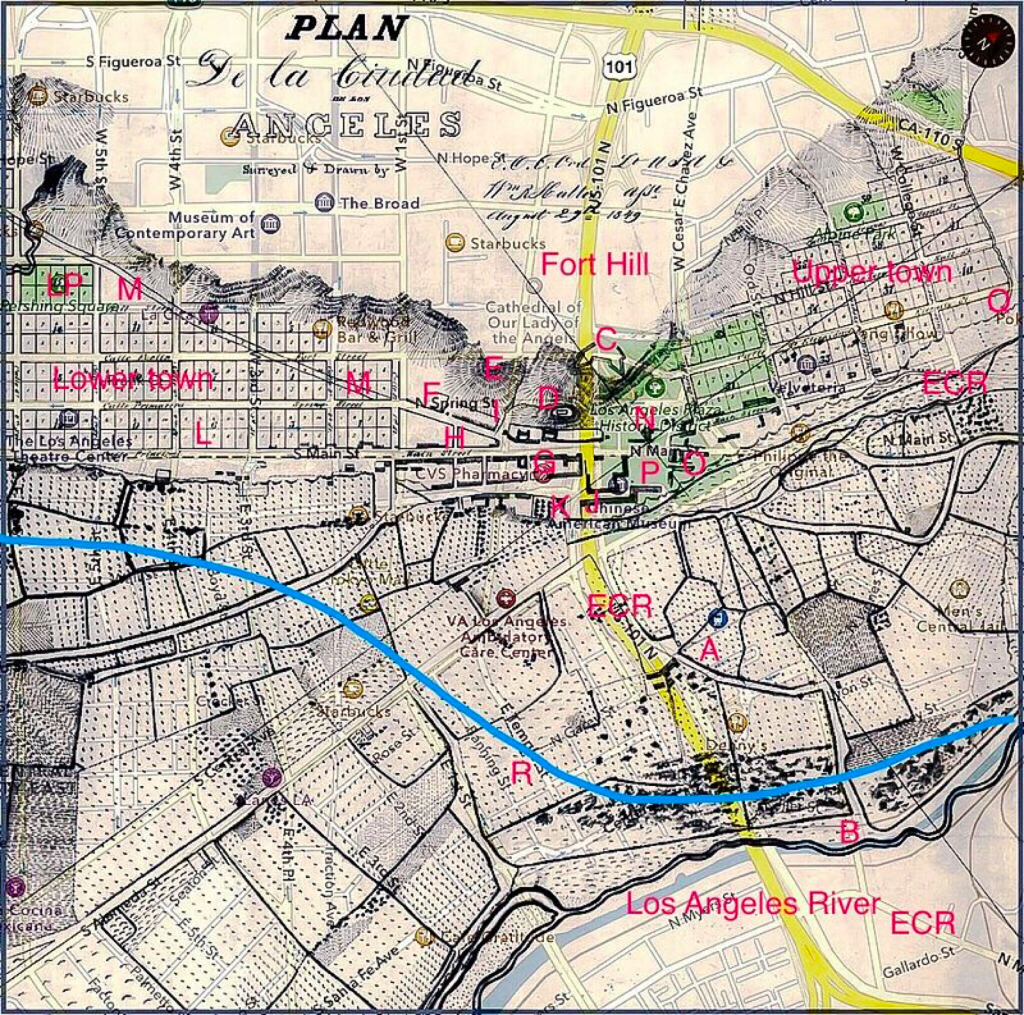
This image is a map of the city of Los Angeles in the early 1990’s. You can see where it is separated into the east and west side. The C-4’s and the Lobos would have held territory on the east side of L.A in a barrio probably located in the section called Undertown on the map.

Women often find themselves filling roles they never asked to be in. Yxta Maya Murray captures the roles that Latina women find themselves in. Murray’s novel Locas is based around the lives of two young women, Lucia and Cecilia, as they attempt to escape the roles that have been forced upon them by their gender.

Amaia Ibarraran Bigalondo, in her article entitled “Chicano Gangs/Chicanca Girls: Surviving the ‘Wild Barrio’” describes gender roles in Chicana culture. She states that “In such a highly hierarchical and male dominated social microstructure, the role of women is the traditional one, perpetrated down through generations and reinforced by popular culture in general.” (Bigalondo 49).

Bigalondo is saying that the gender roles these women face are passed down from several generations before them, and are engrained in their culture. This makes these norms and stereotypical roles more difficult for the newest generation to escape. Cecilia and Lucia are both women of the generation that is currently in power during the time of the novel (late 1980’s/early 1990’s). They both shatter gender norms in their own way.

Lucia finds herself confined to the role of a “sheep”. This role is forced upon her because she is a woman and she is in a relationship with Manny. Women in the novel who are in relationships with gang members are referred to as “sheep” because they are expected to follow the man they are attached to, do what he says, and never talk back.

Lucia flips this gender role on its backside as she uses the men in her life to her advantage. She seduces Beto and convinces him to challenge Manny as the leader of the Lobos, effectively getting Manny out of the way. It is at this time that she is able to start exercising her control as the real leader of the Lobos, making Beto the figurehead while she holds the real power.  

Lucia also goes on to start her own gang of women which she calls her “fire girls”. This itself is breaking gender barriers. BIgalondo makes the point that Lucia’s female gang, though fictional in the novel, is relevant to current gang life. She states “The number of female gangs is fast increasing, as is the involvement of girls in gangs, providing a ‘way out’ from ‘poverty, illness, and despair.’”(Bigalondo 49).

Bigalondo is arguing that this system that has been passed down through several generations of Chicana gangs is no longer working, and that women are making societal and cultural changes to their advantage. This is exactly what Lucia does when forming her gang of “Fire Girls”.

Cecilia also breaks several gender barriers during the Murray’s novel. Cecilia enters into a relationship that breaks two gang norms. Her relationship with Chucha is barrier breaking because it is a relationship between two women, and because Cecilia is a Lobo and Chucha is a C-4. An inter-gang, homosexual relationship removes Cecilia from her role as a sheep entirely.

Cecilia eventually removes herself from gang life entirely and becomes a religious cleaning woman. She is driven by a desire to liberate herself from her sins during her time as a member of the Lobos and the hell she lived through during that time. Bigalondo states that “Cecilia, after a miscarriage and falling in love with another woman, consciously retired from gang and even public life and seeks shelter and comfort in totally devoted service to the Catholic Church.” (Bigalondo 50). Bigalondo is attempting to explain Cecilia’s way of shattering the expected role that was forced upon her.

Cecilia and Lucia both escape their fate as Chicana women in gang life of becoming a sheep by shattering gender norms and expectations. Cecilia turns to liberation through religion, and Lucia exercises control over the Lobos as well as her Fire Girls.

Works Cited

Bigalondo, Amaia I. “”Chicano Gangs/Chicana Girls: Surviving the ‘Wild Barrio'”.” pp. 49-50.

Murray, Yxta M. Locas. New York City, Grove Press, 1997.
The Impact of Celebrity in Loving Pedro Infante

In Denise Chávez’s Loving Pedro Infante she details the way that mass hysteria surrounding the fantasy of “celebrity” can alter reality. The protagonist of Chavez’s novel is young woman named Tere Avíla. Tere and her best friend Irma’s everyday lives are consumed by Mexican pop singer and cinematic icon Pedro Infante. This is despite the fact that the book is set in the 1990’s and Infante died tragically in the 1950’s.

Celebrities are and have been a huge part of numerous cultures all over the world for several decades now. Just as The Beatles were to England, and Elvis was to America, so was Pedro Infante to Mexico. His cult following was extreme, and Tere Avíla is no exception to this unrealistic infatuation.

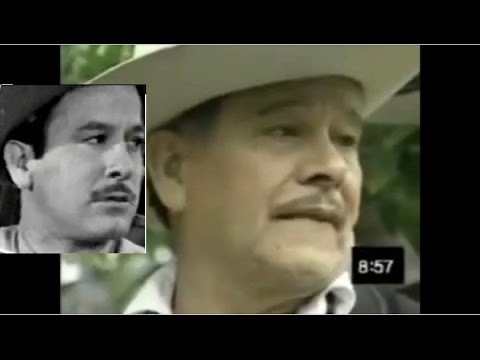
This image is from a 2015 youtube video based on the idea that Infante could still be alive today. Despite Infante’s death over sixty years ago he is still very much alive in the lives of his fans.

In Judy Maloof’s article “Illusion or Reality? Love, the Silver Screen, and the Construction of the Chicana Borderland Subject in Denise Chavez’s Loving Pedro Infante” she provides insight into how cinema has impacted the protagonist’s life. “In addition, as Tere and Irma discuss the plots in Pedro’s films, they learn many lessons about life, love, and the positive and negative aspects of their own cultural heritage.” (151).  Tere and Irma gain insight into life, but this insight becomes more like gospel than guidelines.

Maloof comments on the twisted relationship between celebrity and die-hard fan in her article”. Maloof makes the argument that Tere’s infatuation with Pedro Infante has caused her to separate from her reality by associating herself with Infante and the characters in his films. “Loving Pedro Infante, published in 2001, is about the search for romantic love and the stories we often tell ourselves to justify loving the wrong mate.” (149). Tere so badly wants a Pedro that she is willing to associate any lover with that position.

Maloof states that “there is a stark contrast between Tere’s desires, which are quite conventional, and the reality of her life.” (157). Tere wants her relationship with Lucio to be more than just the affair that it is. She tells her best friend Irma “All I ever wanted was a family” (Chávez 82). These traditional values are depicted in the films that Tere and Irma binge watch together during their “Pedroathons” (Chávez).

Tere’s separation from reality is evident by her obsessive relationship with married man Lucio Valadez. It is clear to the audience and to everyone else in the story that Lucio has no intention of leaving his wife. Tere is so consumed by her fantasy that she has convinced herself that the love between her and Lucio is mutual. Tere even goes so far as to call Lucio’s wife to tell her about the affair. “I wanted to tell her Lucio and I were going to get married,” (Chávez 180).

Tere’s unrequited love for Lucio is not only unhealthy and detrimental to herself, but it does not fit into the traditional lifestyle she continuously confesses to value. Lucio is married to Diolinda, and they have a daughter together. In order to have the unrealistic life she wants with Lucio, Tere would have to destroy a very real family.  

For Tere, the lines between fantasy and reality are so “blurred” as Maloof puts it, she is blind to all of the red flags and obvious signs of danger in her relationship with Lucio. Tere constantly hangs up on her wake up calls from Irma. She even ignores the flickering moments of realization that come from herself. “Lucio is a piojo. A giant flea.” Even when Tere sees the toxicity of her relationship she refuses to let it shatter her fantasy. “Lucio is the man I love,” (Chávez 227). We as the audience know that Lucio and Pedro are not one in the same, but Tere does not share the same consciousness.

Celebrities are often the inspirational and unattainable figures who we desire to know the most. Tere Avíla is so captivated by Pedro Infante that she makes poor life decisions concerning life, friendship, and love to fit her fantasy of having a Pedro.

Works Cited

Chávez, Denise. Loving Pedro Infante. 1st ed., New York City, Pocket Books, 2001, openlibrary.org/books/OL24966950M/Loving_Pedro_Infante.

Maloof, Judy. “Illusion or Reality? Love, the Silver Screen, and the Construction of the Chicana Borderland Subject in Denise Chavez’s Loving Pedro Infante.” Michigan State University Press, 2005

The Control of Men

This image depicts the cycle of control and power that can be held in a relationship

In Angie Cruz’s Soledad we are asked to consider the various ways that a woman’s identity is shaped by the men in her life. We are introduced to five women and the way their lives are controlled by the circumstances laid down by the men in their lives.

Donette Francis in her article entitled “Novel Insights: Sex Work, Secrets, and Depression in Angie Cruz’s Soledad” details how all of the women are affected by their corresponding men not only in their identities, but in their relationships with other women as well.  Francis states the Soledad “explores how these and related circumstances impact one’s sense of self, one’s physical and mental well-being,” (55).

These women, including Soledad, her mother Olivia, her cousin Flaca, her aunt Gorda, and her grandmother Doña Sosa, are prohibited from having a completely independent identity because of the men in their lives.

Soledad’s desire to escape Washington Heights and her family are quickly put on hold by her mother’s illness. Soledad returns to help care for her mother, but finds herself attracted and attached to Richie, a suave, young man who becomes a large part of Soledad’s life. Soledad, however is not the only one attracted to Richie. In fact, he becomes the downfall of Soledad’s relationship to her younger cousin Flaca, who’s obsession with Richie dominates her role in the story.

Flaca flies into a fit of rage after catching Soledad and Richie having sex on the roof. “She wants to ram her fist up inside Soledad’s throat, stick her boot up her ass, twist her neck, yank her hair out of her head,” (Cruz 262). Flaca is enraged after catching Soledad and Richie having sex in the roof. Flaca ignores the fact that she is only fourteen and not at all age appropriate for Richie. Her infatuation with him controls her mental state. This immediate dismissal of all love and admiration Flaca may have had for her cousin based solely on a boy is a clear example of the control a male can have over a female.

This is not the only instance in the story where a man causes a riff in a woman’s relationship cause of the complex circumstances surrounding Olivia’s husband, Manolo and the question of his paternity. Olivia and Soledad’s relationship is plagued by distance and secrecy because of Olivia’s past as a sex worker and Manolo’s abuse.

Olivia and Soledad both struggle with ghosts from the past, both metaphorically and literally. This is a direct result of the circumstances surrounding Manolo’s death. Donette Francis explain what Soledad learned from the murder of her father. “Soledad quietly acts as a passive accomplice, since what she has learned from her mother about intimacy is that only extreme measures will guarantee her survival.” (Francis 66).

Donette Francis describes the healing process that Soledad and Olivia must go through as needing to “reach individual wholeness,” (Francis 70). This means that they have to find the missing parts of themselves within one another. This can only be done through transparency and honesty, but these qualities have been made impossible by Manolo’s hold over Olivia despite his early death.

The only way that Olivia and her mother can remedy their relationship is by purifying themselves in the Dominican Republic. Soledad nearly drowns before she is saved by her mother. This baptismal like cleansing both physically and metaphorically rids Soledad and Olivia of the demons they harbor from Olivia’s past.

Francis states that by “revealing herself and the sexual past she tried to repress, Olviia opens the possibility of establishing a meaningful relationship with her daughter.” (70). Olivia’s past is controlled by her sex work and her relationship with Manolo. Only be permanently ridding her life of Manolo can she escape her comatose move forward in her relationship with her daughter.

Each woman in this novel is prohibited in some way by the men in their lives.

Flaca is prevented from having a meaningful relationship with her cousin because she allows her obsession with Richie to make her hate Soledad.

Gorda cannot move on from the trauma of being abandoned by her husband Raful.

Doña Sosa is confined to her home to care for her ill husband.

Soledad and Olivia cannot establish a healthy relationship with one another because of their inability to escape Manolo’s abuse.

The women in this novel must allow themselves to escape the control held over them by the men of the novel in order to maintain a healthy physical, emotional, and mental life.

Works Cited

Cruz, Angie. Soledad. New York City, Simon and Schuster, 2000, p. 262, http://www.scribd.com/read/224455158/Soledad#.

Francis, Donette. “Novel Insights Sex Work, Secrets, and Depression in Angie Cruz’s Soledad.” pp. 55-70.

The Sacrifice of the Female Body in The Latin Deli

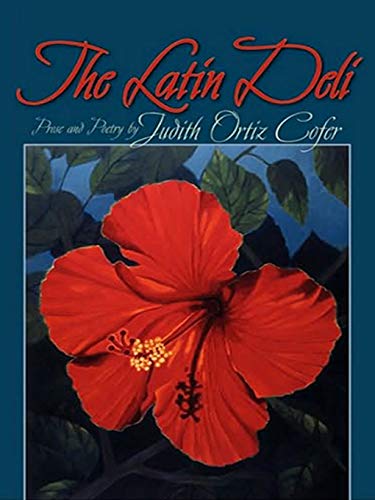
Women and religion historically have a complicated relationship. Institutionalized religion is largely responsible for the way women are viewed in today’s society. Judith Ortiz Cofer uses the chapter entitled “The Purpose of Nuns in her novel The Latin Deli to show the separation of the female body from the female spirit. This is done so through the use of specific language throughout this section of the novel.

Cofer’s novel is collection of short stories and poems that capture the lives of a community of Latin American women. The memoirs touch on several different aspects of life, specifically gender and Catholicism. One section that attempts to grasp the perception of women through the Catholic lens is the chapter entitled “The Purpose of Nuns”. This segment points out the separation between the female spirit and the female body.

Cofer begins this section by describing nuns as “above the tedious cycle of confession” (Cofer 87). By referring to confession as part of a cycle, Cofer is implying that the act of confessing does not have an effect on one’s willingness to sin. According to the narrator, nuns are also above the “penance and absolution they supervised… and the paranoia of God always watching you” (Cofer 87).  Cofer uses the words penance, absolution, and paranoia to capture the fear instilled in young women of Catholic faith. Thus, nuns are above the willingness a woman has to sin, and the fear of the consequences of those sins because she is not subjected to the choice to abstain or to sin.  

The next stanza of this section connects the idea of spiritual superiority to the female body. The young women are put under a “spell of community” by being a sister in Christ. This feeling of community eases the fears that come with having a female body. “In their midst, we sensed freedom from the worry of flesh” (Cofer 87). The worry of flesh this quote is referring to is impurity, or sex. The narrator describes being with the nuns with the word freedom, but this is ironic because nuns lack freedom in every aspect of their physical bodies. The freedom of spiritual devotion must be paid for by imprisonment of the body.

The body is completely detached from the spirit in the next stanza. The narrator describes the physical of a nun as “being merely spirit slips under their thick garments” (Cofer 87). By using the word merely, Cofer is implying that a woman cannot have a spiritual connection with God and a physical body that acts with free will. They must be severed to be free from fear of God and punishment. This idea of ignoring or killing pieces of our soul such as our sexual desire and our ability to act out of free will relates directly to Gloria Anzaldúa’s theory that institutionalized religion requires the separation of body and soul.

Anzaldúa, in the chapter “Entering the Serpent” of her book Borderlands La Frontera, explains that we have “animal bodies” and that institutionalized religions like Catholicism seek to separate our spiritual obligations from our physical bodies. “The Catholic and Protestant religions encourage fear and distrust of life and of the body; they encourage a split between the body and the spirit and totally ignore the soul; they encourage us to kill off parts of ourselves.” (Anzaldúa 59). A nun in Cofer’s novel must kill her association with her physical body.

The female body is frequently associated with the sins of the flesh. Cofer uses specific words such as sanctuary, spotless, and cloistered to demonstrate that nuns, or women who have devoted their lives to Christ, have separated their physical bodies from their spiritual selves. They have taken away the ability to be tainted by the sins that their bodies could potentially commit. Anzaldúa reveals that the Catholic church and other religions “impoverish all life, beauty and pleasure” (Anzaldúa 59). Life, beauty, and pleasure come from the physical body, and once one sacrifices their physical body for religion they may lose the ability to live freely in this world.

Works Cited

Anzaldúa, Gloria. “Entering the Serpent.” Borderlands La Frontera. Aunt Lute Books, 1987, p. 59.

Cofer, Judith O. The Latin Deli. Athens, The University of Georgia Press, 1993, p. 87, http://www.scribd.com/read/421091992/The-Latin-Deli-Prose-and-Poetry#.

The Complex Identity of a Latin American Woman in The House on Mango Street

In Sandra Cisneros’s novel The House on Mango Street the main character, Esperanza, struggles to define herself outside of the circumstances she was born into.

Esperanza is a young, Latin American woman going through adolescence. We are shown the obstacles she is faced with during the pre-teen years of her life. One of the greatest obstacles she faces is defining herself and recognizing where she fits into her own story.

She frequently discusses the appearances, treatment, and roles of other women in the novel including her mother, great-grandmother, aunt, Rachel, Lucy, Nenny, and Sally. Esperanza’s depictions of these women reveal the qualities that are valued in a woman by Latin American culture. Women are always characterized by the way their appearance and their relationship to men. Esperanza is never able to describe herself in a positive way based on these standards. She doesn’t fit into this role.

She wants to be more powerful than the women in her life have been allowed to be, “but I have decided not to grow up tame like the others who lay their necks on the threshold waiting for the ball and chain.” (Cisneros 88) This quote shows Esperanza’s resilience and retaliation to her place as a Latina woman.

In the same section, “Beautiful and Cruel”, she goes on to explain how women who are both beautiful and cruel hold power without a man. Esperanza is exhibiting both the influence her community has had on her, and her will to defy the norm. She wants to be beautiful because she has been taught that beauty is an essential part of being a woman. She also wants to be powerful. This contrasts what she has been taught about how a woman should behave.

All other women that Esperanza describes in the novel are submissive in one form or another. One of the greatest examples of this is her great-grandmother. In the section “My Name” Esperanza tells how her great-grandmother was wild and independent until being forced into marriage. Esperanza details the way that her great-grandmother lived her life from a window seal regretting what she could have been. Esperanza uses this image to convey the fear of being stuck behind a window for her whole life.

Esperanza’s fear is captured in the line ” I have inherited her name, but I don’t want to inherit her place by the window.” (Cisneros 11) This shows her yearning to break free from the life she is stuck in. The circumstances that Esperanza was born into bind her to an identity that she does not fit.

Esperanza’s identity struggle is not only exhibited by the relationships she has with other women in the novel. It is also exhibited in the way she talks about herself. In the section “Four Skinny Trees” she describes how she feels like the lonely trees that grow despite being surrounded by concrete. Esperanza’s circumstances as a young Latin American woman have confined her in the same way the concrete confines the trees.

One of the most striking images of female conformity to cultural and social standards in the novel is Esperanza’s mother’s story of her days in school. “She can speak two languages. She can sing opera. She knows how to fix a T.V. But she doesn’t know which subway train to take to get downtown. I hold her hand very tight while we wait for the right train to arrive.” (Cisneros 90) Her mother used to possess qualities like passion and motivation, but her identity is far different from the “smart cookie” she once was.

This combination of learned traits and fierce independence is why Esperanza cannot define herself by any of the labels that exist in her community. She must make her own labels and define herself by her own terms. Cisneros used Esperanza’s struggle to show the complex identity of Latin American women.

Works Cited

Cisneros, Sandra. The House on Mango Street. New York City, Vintage Contemporaries, 2008, p. 11-90.

https://www.chipublib.org/wp-content/uploads/sites/3/2013/10/house-on-mango-street.jpg

Design a site like this with WordPress.com
Get started