In Denise Chávez’s Loving Pedro Infante she details the way that mass hysteria surrounding the fantasy of “celebrity” can alter reality. The protagonist of Chavez’s novel is young woman named Tere Avíla. Tere and her best friend Irma’s everyday lives are consumed by Mexican pop singer and cinematic icon Pedro Infante. This is despite the fact that the book is set in the 1990’s and Infante died tragically in the 1950’s.
Celebrities are and have been a huge part of numerous cultures all over the world for several decades now. Just as The Beatles were to England, and Elvis was to America, so was Pedro Infante to Mexico. His cult following was extreme, and Tere Avíla is no exception to this unrealistic infatuation.
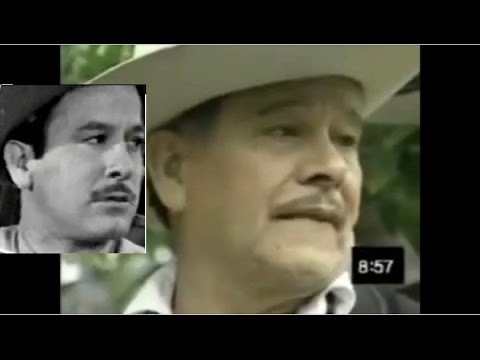
This image is from a 2015 youtube video based on the idea that Infante could still be alive today. Despite Infante’s death over sixty years ago he is still very much alive in the lives of his fans.
In Judy Maloof’s article “Illusion or Reality? Love, the Silver Screen, and the Construction of the Chicana Borderland Subject in Denise Chavez’s Loving Pedro Infante” she provides insight into how cinema has impacted the protagonist’s life. “In addition, as Tere and Irma discuss the plots in Pedro’s films, they learn many lessons about life, love, and the positive and negative aspects of their own cultural heritage.” (151). Tere and Irma gain insight into life, but this insight becomes more like gospel than guidelines.
Maloof comments on the twisted relationship between celebrity and die-hard fan in her article”. Maloof makes the argument that Tere’s infatuation with Pedro Infante has caused her to separate from her reality by associating herself with Infante and the characters in his films. “Loving Pedro Infante, published in 2001, is about the search for romantic love and the stories we often tell ourselves to justify loving the wrong mate.” (149). Tere so badly wants a Pedro that she is willing to associate any lover with that position.
Maloof states that “there is a stark contrast between Tere’s desires, which are quite conventional, and the reality of her life.” (157). Tere wants her relationship with Lucio to be more than just the affair that it is. She tells her best friend Irma “All I ever wanted was a family” (Chávez 82). These traditional values are depicted in the films that Tere and Irma binge watch together during their “Pedroathons” (Chávez).
Tere’s separation from reality is evident by her obsessive relationship with married man Lucio Valadez. It is clear to the audience and to everyone else in the story that Lucio has no intention of leaving his wife. Tere is so consumed by her fantasy that she has convinced herself that the love between her and Lucio is mutual. Tere even goes so far as to call Lucio’s wife to tell her about the affair. “I wanted to tell her Lucio and I were going to get married,” (Chávez 180).
Tere’s unrequited love for Lucio is not only unhealthy and detrimental to herself, but it does not fit into the traditional lifestyle she continuously confesses to value. Lucio is married to Diolinda, and they have a daughter together. In order to have the unrealistic life she wants with Lucio, Tere would have to destroy a very real family.
For Tere, the lines between fantasy and reality are so “blurred” as Maloof puts it, she is blind to all of the red flags and obvious signs of danger in her relationship with Lucio. Tere constantly hangs up on her wake up calls from Irma. She even ignores the flickering moments of realization that come from herself. “Lucio is a piojo. A giant flea.” Even when Tere sees the toxicity of her relationship she refuses to let it shatter her fantasy. “Lucio is the man I love,” (Chávez 227). We as the audience know that Lucio and Pedro are not one in the same, but Tere does not share the same consciousness.
Celebrities are often the inspirational and unattainable figures who we desire to know the most. Tere Avíla is so captivated by Pedro Infante that she makes poor life decisions concerning life, friendship, and love to fit her fantasy of having a Pedro.
Works Cited
Chávez, Denise. Loving Pedro Infante. 1st ed., New York City, Pocket Books, 2001, openlibrary.org/books/OL24966950M/Loving_Pedro_Infante.
Maloof, Judy. “Illusion or Reality? Love, the Silver Screen, and the Construction of the Chicana Borderland Subject in Denise Chavez’s Loving Pedro Infante.” Michigan State University Press, 2005
 Kate's Latino/a Literature in English Blog