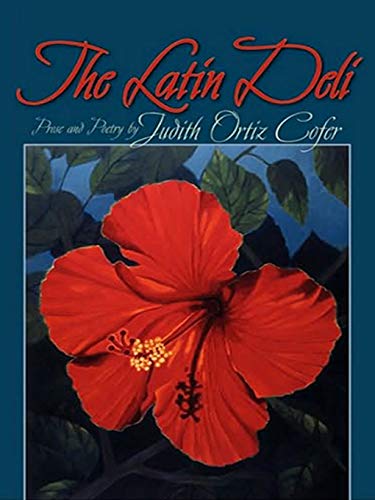
Women and religion historically have a complicated relationship. Institutionalized religion is largely responsible for the way women are viewed in today’s society. Judith Ortiz Cofer uses the chapter entitled “The Purpose of Nuns” in her novel The Latin Deli to show the separation of the female body from the female spirit. This is done so through the use of specific language throughout this section of the novel.
Cofer’s novel is collection of short stories and poems that capture the lives of a community of Latin American women. The memoirs touch on several different aspects of life, specifically gender and Catholicism. One section that attempts to grasp the perception of women through the Catholic lens is the chapter entitled “The Purpose of Nuns”. This segment points out the separation between the female spirit and the female body.
Cofer begins this section by describing nuns as “above the tedious cycle of confession” (Cofer 87). By referring to confession as part of a cycle, Cofer is implying that the act of confessing does not have an effect on one’s willingness to sin. According to the narrator, nuns are also above the “penance and absolution they supervised… and the paranoia of God always watching you” (Cofer 87). Cofer uses the words penance, absolution, and paranoia to capture the fear instilled in young women of Catholic faith. Thus, nuns are above the willingness a woman has to sin, and the fear of the consequences of those sins because she is not subjected to the choice to abstain or to sin.
The next stanza of this section connects the idea of spiritual superiority to the female body. The young women are put under a “spell of community” by being a sister in Christ. This feeling of community eases the fears that come with having a female body. “In their midst, we sensed freedom from the worry of flesh” (Cofer 87). The worry of flesh this quote is referring to is impurity, or sex. The narrator describes being with the nuns with the word freedom, but this is ironic because nuns lack freedom in every aspect of their physical bodies. The freedom of spiritual devotion must be paid for by imprisonment of the body.
The body is completely detached from the spirit in the next stanza. The narrator describes the physical of a nun as “being merely spirit slips under their thick garments” (Cofer 87). By using the word merely, Cofer is implying that a woman cannot have a spiritual connection with God and a physical body that acts with free will. They must be severed to be free from fear of God and punishment. This idea of ignoring or killing pieces of our soul such as our sexual desire and our ability to act out of free will relates directly to Gloria Anzaldúa’s theory that institutionalized religion requires the separation of body and soul.
Anzaldúa, in the chapter “Entering the Serpent” of her book Borderlands La Frontera, explains that we have “animal bodies” and that institutionalized religions like Catholicism seek to separate our spiritual obligations from our physical bodies. “The Catholic and Protestant religions encourage fear and distrust of life and of the body; they encourage a split between the body and the spirit and totally ignore the soul; they encourage us to kill off parts of ourselves.” (Anzaldúa 59). A nun in Cofer’s novel must kill her association with her physical body.
The female body is frequently associated with the sins of the flesh. Cofer uses specific words such as sanctuary, spotless, and cloistered to demonstrate that nuns, or women who have devoted their lives to Christ, have separated their physical bodies from their spiritual selves. They have taken away the ability to be tainted by the sins that their bodies could potentially commit. Anzaldúa reveals that the Catholic church and other religions “impoverish all life, beauty and pleasure” (Anzaldúa 59). Life, beauty, and pleasure come from the physical body, and once one sacrifices their physical body for religion they may lose the ability to live freely in this world.
Works Cited
Anzaldúa, Gloria. “Entering the Serpent.” Borderlands La Frontera. Aunt Lute Books, 1987, p. 59.
Cofer, Judith O. The Latin Deli. Athens, The University of Georgia Press, 1993, p. 87, http://www.scribd.com/read/421091992/The-Latin-Deli-Prose-and-Poetry#.
 Kate's Latino/a Literature in English Blog